

Uterine Fibroid Treatment (UFE): A Safe, Effective, and Non-Surgical Solution for Fibroids
Table of Contents
- What is Uterine Fibroid Treatment (UFE)?
- Understanding Uterine Fibroids
- Symptoms of Uterine Fibroids
- Causes and Risk Factors
- Why Choose Uterine Fibroid Treatment (UFE)?
- How Does Uterine Fibroid Treatment (UFE) Work?
- Benefits of Uterine Fibroid Treatment (UFE)
- Who is a Good Candidate for UFE?
- What Happens During the UFE Procedure?
- Recovery After Uterine Fibroid Treatment
- Risks and Possible Side Effects
- UFE vs Myomectomy vs Hysterectomy
- Why Choose an Experienced Interventional Radiologist?
- Conclusion
- Frequently Asked Questions (FAQs)
Uterine Fibroid Treatment (UFE): A Safe, Effective, and Non-Surgical Solution for Fibroids
If you are experiencing heavy menstrual bleeding, pelvic pain, frequent urination, or abdominal swelling, uterine fibroids could be the cause. Fortunately, Uterine Fibroid Treatment (UFE) offers a minimally invasive, highly effective solution without removing the uterus.
Unlike traditional surgery, Uterine Fibroid Treatment (UFE) helps shrink fibroids by blocking their blood supply, allowing women to recover faster with less pain and minimal scarring. Today, many women are choosing this advanced non-surgical fibroid treatment because it preserves the uterus and allows them to return to their daily routine much sooner than surgery.
Whether you have one fibroid or multiple fibroids, Uterine Fibroid Treatment (UFE) can provide long-lasting relief while avoiding the risks associated with hysterectomy.
What is Uterine Fibroid Treatment (UFE)?
Uterine Fibroid Treatment (UFE), also known as Uterine Fibroid Embolization, is a minimally invasive procedure performed by an Interventional Radiologist.
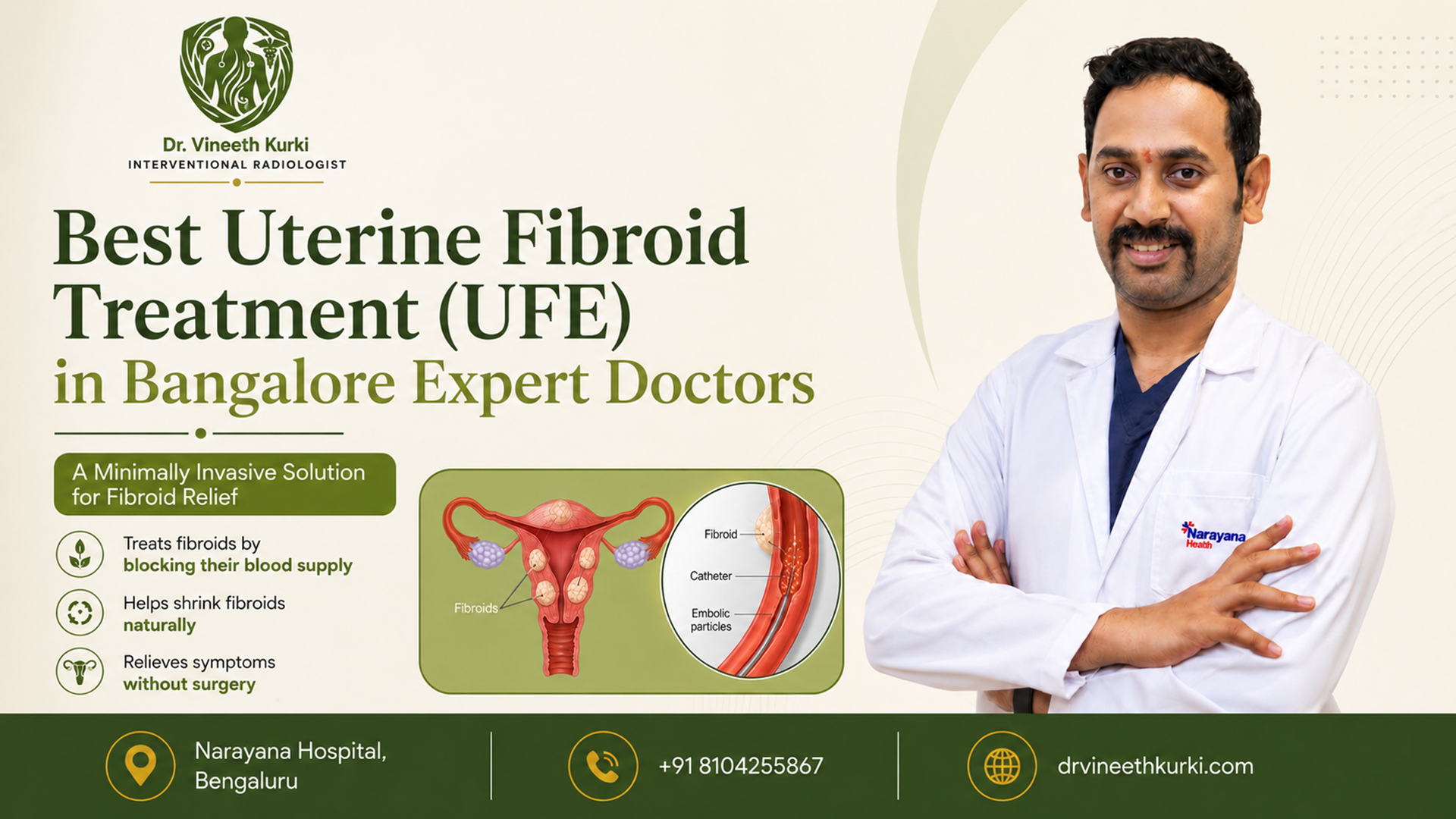
During the procedure, tiny particles are injected into the arteries supplying blood to the fibroids. Once the blood flow is blocked, the fibroids gradually shrink, symptoms improve, and the healthy uterus remains intact.
Unlike open surgery, Uterine Fibroid Treatment (UFE) requires only a tiny incision and usually allows patients to return home the same day or the following day.
Understanding Uterine Fibroids
Uterine fibroids are non-cancerous growths that develop in or around the uterus. They vary in size from tiny seed-like nodules to large masses capable of enlarging the uterus significantly.
Many women have fibroids without realizing it, while others experience symptoms that interfere with daily life.
Fibroids may develop as:
- Intramural Fibroids
- Submucosal Fibroids
- Subserosal Fibroids
- Pedunculated Fibroids
The severity of symptoms often depends on the number, size, and location of the fibroids.
Symptoms of Uterine Fibroids
Women with fibroids may experience:
- Heavy or prolonged menstrual bleeding
- Severe menstrual cramps
- Pelvic pain or pressure
- Frequent urination
- Constipation
- Lower back pain
- Pain during intercourse
- Enlarged abdomen
- Difficulty becoming pregnant in some cases
- Fatigue due to excessive blood loss
If these symptoms persist, seeking evaluation for Uterine Fibroid Treatment (UFE) can help prevent complications and improve quality of life.
Causes and Risk Factors
The exact cause of uterine fibroids remains unknown, but several factors increase the likelihood of developing them.
Common risk factors include:
- Hormonal changes (Estrogen and Progesterone)
- Family history
- Age between 30 and 50 years
- Obesity
- Early menstruation
- High blood pressure
- Vitamin D deficiency
- Lifestyle factors
Although fibroids are generally non-cancerous, they should be evaluated by a specialist to determine the most appropriate treatment.
Why Choose Uterine Fibroid Treatment (UFE)?
Many women want relief from fibroid symptoms without undergoing major surgery. Uterine Fibroid Treatment (UFE) offers exactly that.
Unlike hysterectomy, which removes the uterus, UFE preserves it while effectively treating fibroids.
Women choose Uterine Fibroid Treatment (UFE) because it provides:
- No large surgical incision
- Minimal blood loss
- Faster recovery
- Short hospital stay
- Less pain after treatment
- No removal of the uterus
- Treatment of multiple fibroids at once
- Long-lasting symptom relief
How Does Uterine Fibroid Treatment (UFE) Work?
The procedure begins with local anesthesia and mild sedation.
A tiny catheter is inserted through a small puncture in the wrist or groin artery. Using advanced imaging guidance, the Interventional Radiologist carefully guides the catheter to the uterine arteries.
Microscopic embolic particles are then injected to block blood flow to the fibroids.
Without blood supply, the fibroids gradually shrink over the following weeks and months.
The surrounding healthy uterine tissue continues receiving blood through other arteries, allowing the uterus to remain healthy.
Benefits of Uterine Fibroid Treatment (UFE)
Choosing Uterine Fibroid Treatment (UFE) offers several advantages over conventional surgery.
Minimally Invasive
Only a tiny puncture is required, eliminating the need for large surgical cuts.
Preserves the Uterus
Women can avoid hysterectomy while effectively treating fibroids.
Faster Recovery
Most patients return to work within one to two weeks.
Minimal Scarring
No major surgical scars are left behind.
Effective Symptom Relief
Most women notice significant improvement in:
- Heavy bleeding
- Pelvic pressure
- Frequent urination
- Pain
- Abdominal fullness
Treats Multiple Fibroids
Unlike surgery that removes selected fibroids, UFE treats multiple fibroids simultaneously.
Lower Risk of Complications
Compared with major surgery, UFE generally has fewer complications and shorter hospitalization.
Who is a Good Candidate for UFE?
You may be a suitable candidate for Uterine Fibroid Treatment (UFE) if you:
- Have symptomatic uterine fibroids
- Experience heavy menstrual bleeding
- Have pelvic pain or pressure
- Wish to avoid surgery
- Want to preserve your uterus
- Have multiple fibroids
- Are not an ideal candidate for open surgery
A detailed consultation and imaging evaluation help determine whether UFE is the right treatment option.
What Happens During the UFE Procedure?
The procedure generally takes between 45 and 90 minutes.
Step 1
Local anesthesia is administered.
Step 2
A tiny catheter is inserted through the wrist or groin.
Step 3
The catheter is guided into the uterine arteries using X-ray imaging.
Step 4
Embolic particles are injected to block blood flow.
Step 5
The catheter is removed, and a small bandage is applied.
Most patients remain under observation for several hours before going home.
Recovery After Uterine Fibroid Treatment
Recovery from Uterine Fibroid Treatment (UFE) is much quicker than traditional surgery.
Most women experience:
- Mild pelvic cramps
- Fatigue
- Nausea for a short period
- Low-grade fever
These symptoms usually improve within a few days.
Recovery tips include:
- Drink plenty of fluids.
- Take prescribed medications.
- Avoid strenuous activities for about one week.
- Attend scheduled follow-up appointments.
Most women notice significant improvement within three months as fibroids continue shrinking.
Risks and Possible Side Effects
Like any medical procedure, UFE has some risks, although serious complications are uncommon.
Possible side effects include:
- Temporary pelvic pain
- Mild fever
- Nausea
- Vaginal discharge
- Bruising at the catheter site
- Infection (rare)
- Allergic reaction to contrast dye (rare)
Your doctor will discuss all potential risks before the procedure.
UFE vs Myomectomy vs Hysterectomy
| Feature | UFE | Myomectomy | Hysterectomy |
|---|---|---|---|
| Surgery Required | No | Yes | Yes |
| Uterus Preserved | Yes | Yes | No |
| Hospital Stay | Short | Several Days | Several Days |
| Recovery Time | 1–2 Weeks | 4–6 Weeks | 6–8 Weeks |
| Treats Multiple Fibroids | Yes | Sometimes | Yes |
| Large Incision | No | Often | Often |
For many women, Uterine Fibroid Treatment (UFE) offers an excellent balance between effectiveness, safety, and quicker recovery.
Why Choose an Experienced Interventional Radiologist?
The success of Uterine Fibroid Treatment (UFE) depends greatly on the expertise of the Interventional Radiologist performing the procedure.
An experienced specialist can:
- Accurately identify fibroid blood supply
- Minimize procedure risks
- Improve treatment outcomes
- Reduce recovery time
- Provide personalized care throughout the treatment journey
Choosing a skilled and experienced team ensures the best possible results.
Conclusion
Living with uterine fibroids does not have to mean living with constant pain, heavy bleeding, or major surgery. Uterine Fibroid Treatment (UFE) offers a safe, minimally invasive, and highly effective alternative for women seeking lasting symptom relief.
By preserving the uterus, treating multiple fibroids simultaneously, and providing faster recovery than traditional surgery, Uterine Fibroid Treatment (UFE) has become one of the most trusted options for managing symptomatic fibroids. If fibroid symptoms are affecting your quality of life, consult an experienced Interventional Radiologist to determine whether UFE is the right solution for you.
Frequently Asked Questions (FAQs)
1. What is Uterine Fibroid Treatment (UFE)?
UFE is a minimally invasive procedure that blocks the blood supply to uterine fibroids, causing them to shrink while preserving the uterus.
2. Is Uterine Fibroid Treatment (UFE) painful?
The procedure is performed under local anesthesia with sedation. Mild cramping afterward is common and is usually managed with medication.
3. How long does the UFE procedure take?
The procedure generally takes between 45 and 90 minutes.
4. How soon can I return to work after UFE?
Most women resume normal daily activities within one to two weeks.
5. Can multiple fibroids be treated at once?
Yes. One of the biggest advantages of Uterine Fibroid Treatment (UFE) is that it can treat multiple fibroids in a single procedure.\
6. Is UFE better than hysterectomy?
For women who want to preserve their uterus and avoid major surgery, UFE is often an excellent treatment option. The best choice depends on individual medical needs.
7. Will fibroids come back after UFE?
Most treated fibroids continue to shrink and do not regrow. However, new fibroids may develop in some women over time.
8. Who performs Uterine Fibroid Treatment (UFE)?
The procedure is performed by an experienced Interventional Radiologist using image-guided techniques.