Arterial diseases occur when arteries become narrowed or blocked, reducing blood flow to vital organs and tissues. This can lead to serious health problems such as pain, organ damage, or impaired circulation.Interventional Radiology offers minimally invasive arterial treatments that restore blood flow without the need for major surgery. These procedures are performed using image-guided techniques such as angiography, allowing doctors to treat the affected arteries with precision.
Our department provides advanced treatments including:
Angioplasty
Arterial Stenting
Bronchial Artery Embolization (BAE)
These procedures are commonly used to treat blockages in mesenteric arteries, limb arteries, and renal arteries, improving blood circulation and reducing symptoms.
Angioplasty & Stenting
What is Angioplasty?
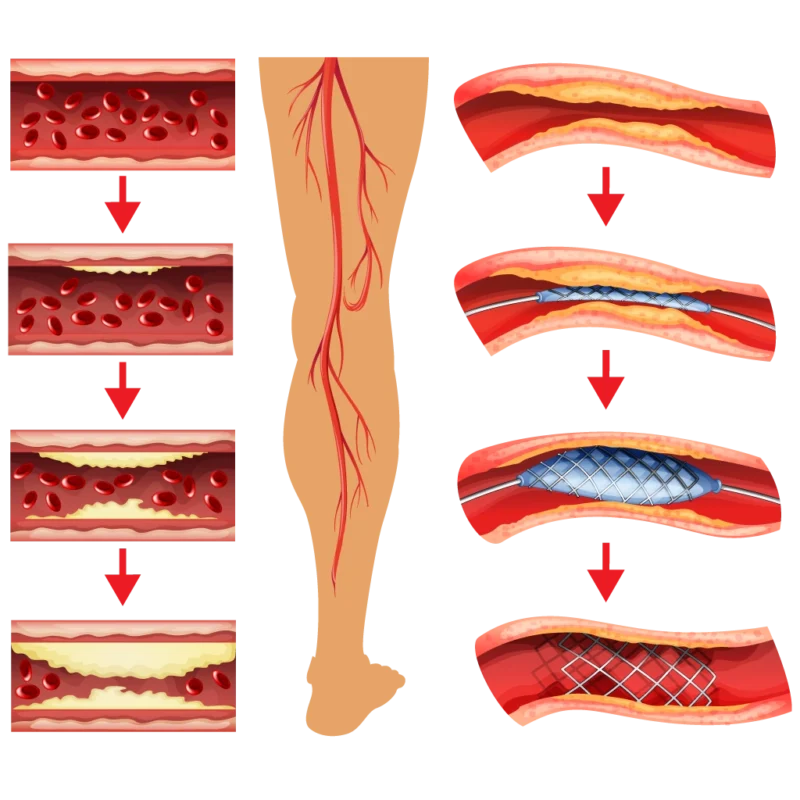
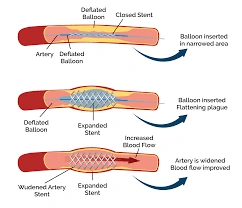
Angioplasty is a minimally invasive procedure used to open narrowed or blocked arteries. A small balloon attached to a catheter is inserted into the affected artery and inflated to widen the vessel, restoring normal blood flow.
In many cases, a stent (a small mesh tube) is placed inside the artery to keep it open and prevent future blockage.
Conditions Treated
Angioplasty and stenting can be used to treat blockages in several important arteries, including:
Mesenteric Arteries
These arteries supply blood to the intestines. Blockage can cause severe abdominal pain and digestive problems.
Limb Arteries
Narrowed arteries in the legs or arms can lead to Peripheral Artery Disease (PAD), causing pain, numbness, or difficulty walking.
Renal Arteries
Renal artery narrowing may lead to high blood pressure and kidney damage. Angioplasty can restore blood flow to the kidneys.
Bronchial Artery Embolization (BAE)
What is Bronchial Artery Embolization?
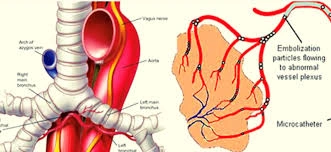
Bronchial Artery Embolization (BAE) is a procedure used to control or stop bleeding in the lungs, particularly in cases of severe coughing of blood (hemoptysis).
A catheter is inserted into the artery supplying the lungs, and tiny embolic particles are injected to block the bleeding vessel.