
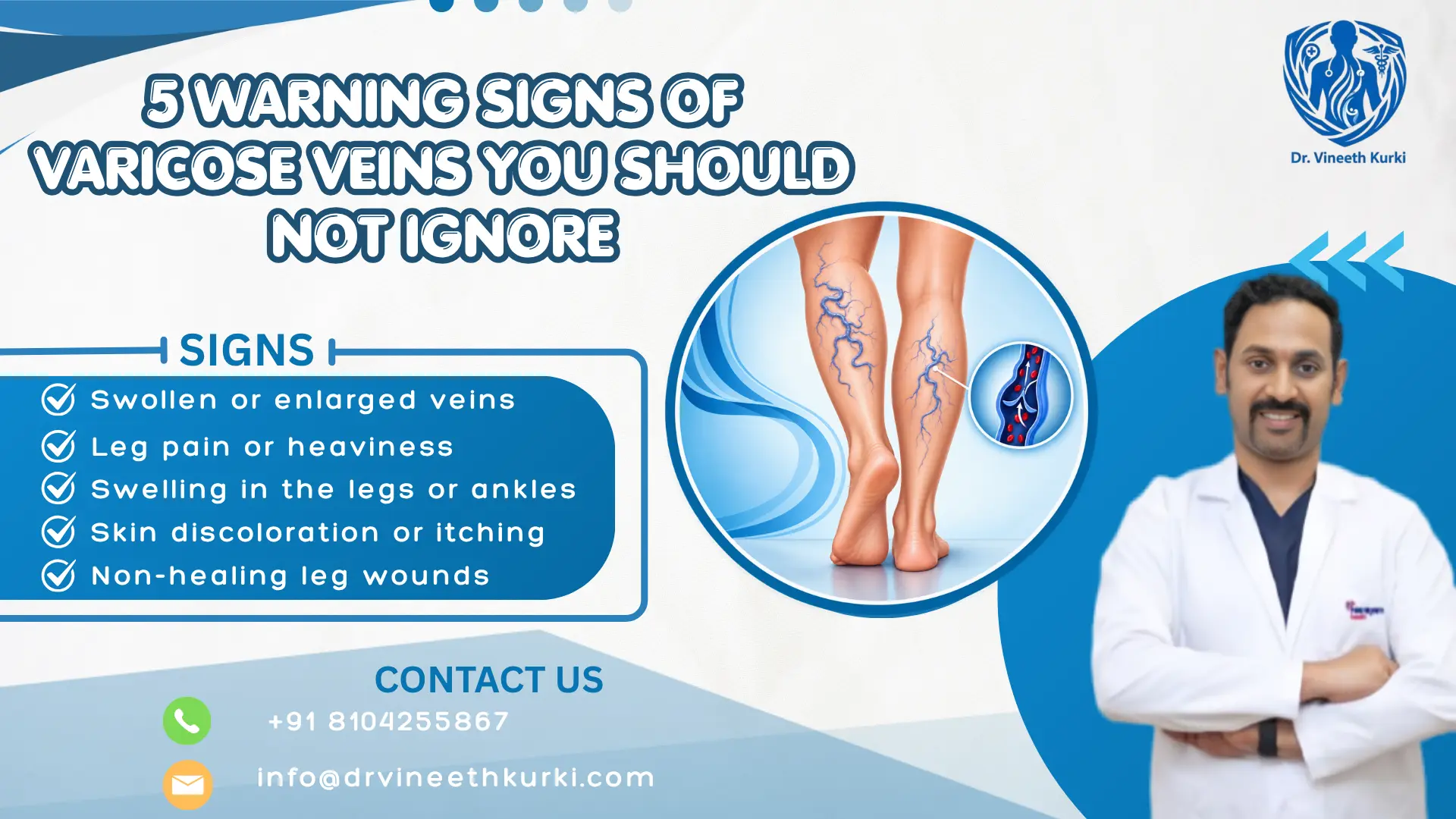
Recognizing the 5 Warning Signs of Varicose Veins can help you understand when enlarged or twisted veins may require more than simple cosmetic attention. Varicose veins develop when the valves inside the veins do not work effectively, allowing blood to flow backward and collect in the lower legs. This can increase pressure inside the veins and gradually lead to symptoms.
Some people have visible veins without significant discomfort, while others may experience aching, swelling, skin changes, itching, burning, or other complications. Early recognition can help people seek appropriate medical advice before symptoms become more difficult to manage.
These symptoms can occur in both men and women. People who stand or sit for long periods, have a family history of vein problems, are less physically active, or have other risk factors may be more likely to develop venous problems.
If persistent leg vein problems are affecting your comfort or daily activities, a specialist evaluation can help determine whether an underlying circulation problem is present.
Symptoms: 5 Warning Signs of Varicose Veins You Should Not Ignore
The 5 Warning Signs of Varicose Veins are not limited to the appearance of prominent veins. Certain symptoms may indicate that blood is not circulating properly through the affected veins.
1. Persistent Leg Pain or Aching
Aching, throbbing, or a heavy sensation in the legs is a common symptom. Discomfort may become more noticeable after prolonged standing or sitting and may improve after resting or elevating the legs.
If pain continues regularly, especially when it occurs with visible enlarged veins, medical evaluation can help identify the underlying cause.
2. Swelling Around the Ankles or Legs
Swelling around the ankles and lower legs, particularly toward the end of the day, can occur when blood and fluid accumulate in the lower limbs.
Venous disease may increase pressure within the veins and contribute to swelling. Frequent or worsening swelling should be assessed by a healthcare professional, especially when one leg is affected considerably more than the other.
3. Skin Discoloration or Texture Changes
Changes in the skin around the ankles or lower legs may occur as venous disease progresses. The skin can become darker, reddish, dry, itchy, or harder than usual.
Persistent skin changes should not be ignored because long-term venous pressure can contribute to skin damage and, in some cases, venous ulcers.
4. Itching, Burning or Night-Time Leg Cramps
Some people experience itching, burning, restless legs, or muscle cramps after spending several hours standing or walking.
Although these symptoms can have different causes, they deserve attention when they occur together with prominent leg veins. A specialist can determine whether poor venous circulation is contributing to the discomfort.
5. Open Sores, Bleeding or Significant Vein Changes
Open sores near the ankle, bleeding from an enlarged vein, significant inflammation, or rapidly worsening symptoms require medical attention.
These problems can occur as complications of chronic venous disease. Prompt assessment may help prevent the condition from becoming more difficult to manage.
Causes, Diagnosis and Treatment
The 5 Warning Signs of Varicose Veins are commonly associated with problems involving the valves and circulation within the leg veins.
Healthy valves help keep blood moving toward the heart. When these valves become weak or damaged, blood can flow backward and pool in the legs. Over time, increased venous pressure can contribute to enlarged veins and related symptoms.
Causes and Risk Factors
Several factors may increase the likelihood of developing varicose veins:
- Family history of venous disease
- Increasing age
- Prolonged standing
- Long periods of sitting
- Excess body weight
- Previous blood clots or venous disease
- Pregnancy and hormonal factors
- Reduced physical activity
Varicose veins can affect both men and women. Therefore, men should also take persistent leg vein problems seriously and seek appropriate assessment when symptoms continue.
Diagnosis
A specialist generally begins with a medical history and physical examination. The legs may be examined while standing to assess visible veins, swelling, and changes in the skin.
A duplex ultrasound is an important diagnostic test for many patients. It can assess blood flow and identify abnormal venous reflux. The results can help the specialist determine which veins may be responsible for symptoms and whether treatment is appropriate.
Treatment and Procedures
Having symptoms does not automatically mean that you need a specific procedure. Treatment is selected according to your symptoms, severity of venous reflux, ultrasound findings, overall health, and individual circumstances.
Depending on the diagnosis, management may include:
- Lifestyle modifications
- Regular walking and physical activity
- Leg elevation during rest
- Compression therapy when appropriate
- Endovenous thermal ablation
- Ultrasound-guided foam sclerotherapy
- Non-thermal vein treatments
- Surgical treatment in selected cases
For suitable patients with symptomatic veins and confirmed venous reflux, minimally invasive endovenous procedures may be considered. The appropriate treatment should be decided after clinical assessment and imaging.
Benefits of Appropriate Treatment
Appropriate varicose vein treatment may provide several potential benefits:
- Reduced aching and heaviness
- Improvement in swelling
- Better day-to-day comfort
- Management of problematic superficial veins
- Lower risk of certain complications
- Improved quality of life
- Improved appearance of prominent veins in selected patients
The goal is not simply to improve the appearance of the legs. Identifying and addressing abnormal blood flow is an important part of appropriate management.
Recovery
Recovery varies according to the treatment performed. Modern minimally invasive procedures generally involve less downtime than traditional vein surgery.
Following treatment, patients may be advised to walk regularly and follow instructions related to compression garments, exercise, wound care, or access-site care.
The treating specialist will provide an individualized recovery plan based on the procedure and the patient’s condition.
Comparison: Conservative Care vs Minimally Invasive Treatment
| Approach | Common Purpose | Typical Role |
| Lifestyle changes | Improve circulation and reduce symptoms | Mild or supportive management |
| Compression therapy | Reduce swelling and venous symptoms | Selected patients |
| Endovenous ablation | Close an incompetent vein | Confirmed venous reflux |
| Foam sclerotherapy | Close selected problematic veins | Appropriate anatomy |
| Surgery | Remove or ligate problematic veins | When less-invasive options are unsuitable |
The most suitable approach depends on the patient’s symptoms, clinical examination, and duplex ultrasound findings rather than appearance alone.
FAQs About the 5 Warning Signs of Varicose Veins
1. Are varicose veins dangerous?
Not every case is dangerous. However, symptomatic or progressively worsening veins may be associated with chronic venous disease and complications such as skin changes, bleeding, and venous ulcers.
2. What are the most important symptoms to watch for?
Persistent pain, swelling, skin discoloration, itching or burning, open sores, and bleeding are important symptoms that deserve medical evaluation.
3. Can men develop varicose veins?
Yes. Varicose veins can affect men as well as women. Men with persistent leg vein problems should seek an appropriate vascular assessment rather than ignoring their symptoms.
4. Can varicose veins go away on their own?
Established varicose veins generally do not disappear permanently without treatment. Lifestyle measures may help control symptoms, but persistent problems may require specialist evaluation.
5. Is walking good for varicose veins?
Regular walking can support healthy circulation and is commonly recommended as part of lifestyle management. However, exercise cannot repair damaged venous valves.
6. When should I see a specialist?
Consider medical evaluation if you experience persistent pain, swelling, skin changes, bleeding, open sores, or enlarged veins that interfere with daily activities.
7. Is laser treatment available?
Yes. Endovenous thermal ablation, including laser-based treatment, is a minimally invasive option for suitable patients with venous reflux.
8. Does treatment require major surgery?
Not necessarily. Many suitable patients can be treated using minimally invasive endovenous procedures. The appropriate option depends on clinical assessment and duplex ultrasound findings.
9. Can the condition return after treatment?
Yes. Treatment targets the problematic veins, but new enlarged veins can develop over time. Some patients may also require additional treatment.
10. Can compression stockings cure the problem?
Compression stockings can help manage symptoms such as swelling and aching, but they do not repair damaged venous valves. Their use should be based on individual clinical circumstances.
Conclusion
Recognizing the 5 Warning Signs of Varicose Veins can help people identify when visible vein changes may require professional evaluation. Persistent pain, swelling, skin changes, itching or burning, and ulcers or bleeding should not be ignored.
These symptoms may be associated with underlying venous reflux. A duplex ultrasound can help assess blood flow and guide treatment decisions.
Modern varicose vein treatment may include minimally invasive procedures such as endovenous thermal ablation and ultrasound-guided foam sclerotherapy, along with conservative management when appropriate.
If you are experiencing persistent leg vein problems, expert evaluation can help determine whether treatment is necessary and which option may be most suitable.
Book an appointment with Dr. Vineeth Kurki, Interventional Radiologist in Bengaluru, for evaluation of varicose veins and other venous conditions. Dr. Vineeth Kurki provides expertise in minimally invasive, image-guided interventional radiology procedures.
Don’t ignore persistent leg pain, swelling, or visible enlarged veins. Book an appointment with Dr. Vineeth Kurki in Bengaluru today for an expert assessment of your vein health.