

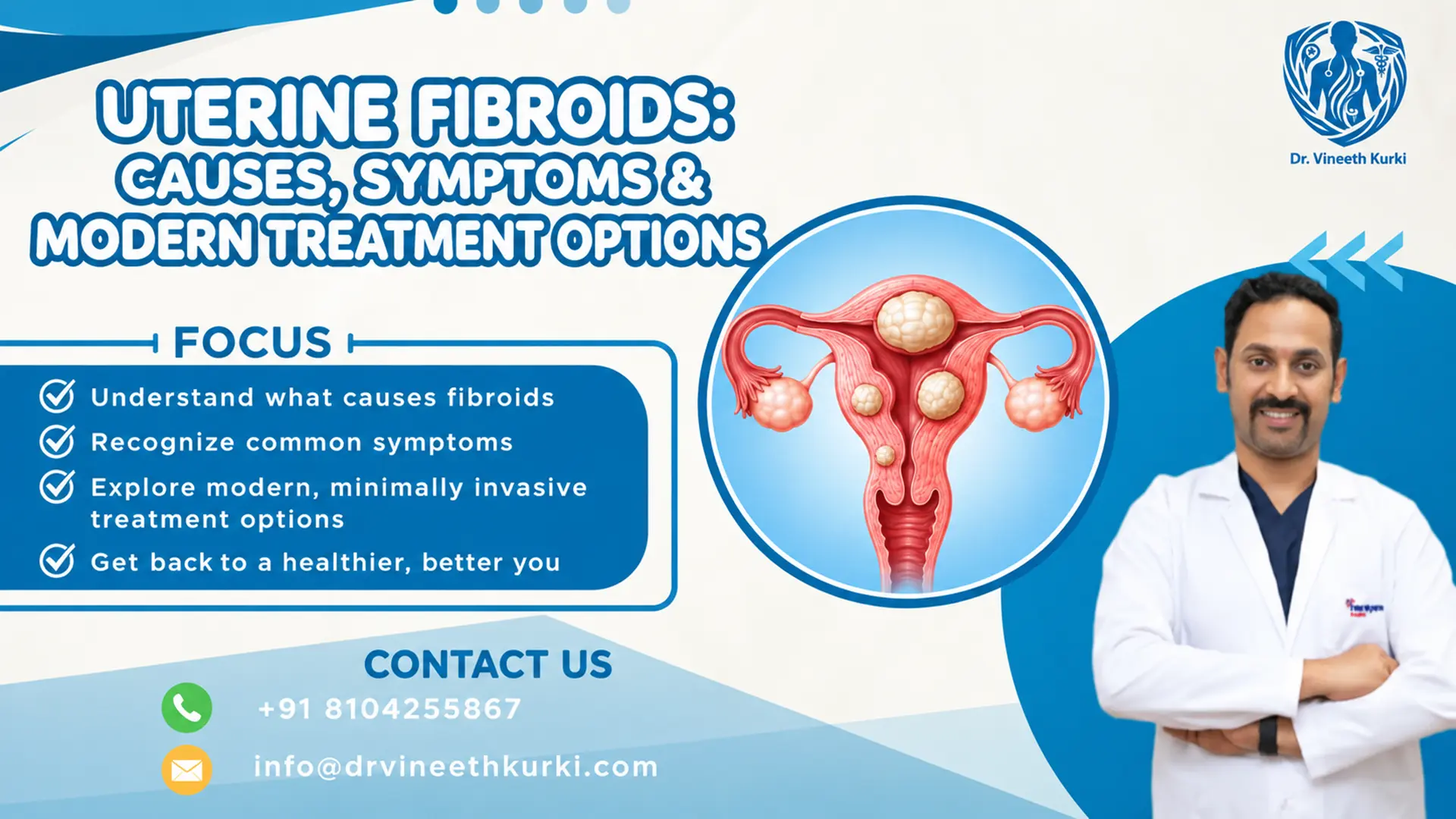
Uterine fibroids are common, non-cancerous growths that develop from the muscular tissue of the uterus. They can range from very small nodules to larger growths that change the shape or size of the uterus. Some women have no symptoms, while others experience heavy periods, pelvic pressure, abdominal pain, frequent urination, or fertility-related concerns.
Understanding Uterine Fibroids Causes, Symptoms & Treatment is important because treatment is not the same for every woman. The size, number, and location of fibroids, severity of symptoms, age, overall health, and future pregnancy plans all influence the treatment decision.
For women looking for Uterine Fibroids Causes, Symptoms & Treatment, modern interventional radiology has introduced minimally invasive approaches that may help manage symptomatic fibroids while avoiding major surgery. One such option is uterine artery embolization (UAE), in which the blood supply to the fibroids is reduced so that they shrink over time.
What Are Uterine Fibroids? Causes and Symptoms
Uterine fibroids, also called leiomyomas or myomas, are benign growths arising from the smooth muscle of the uterus. They can occur as a single growth or as multiple fibroids and may develop in different parts of the uterus.
The exact reason why fibroids develop is not completely understood. However, genetic changes and reproductive hormones such as estrogen and progesterone appear to contribute to their growth. Fibroids commonly become smaller after menopause when hormone levels decline.
Common Causes and Risk Factors
Although there is no single confirmed cause, several factors may be associated with fibroid development:
- Genetic or cellular changes in uterine muscle
- Sensitivity to estrogen and progesterone
- Family history of fibroids
- Reproductive and hormonal factors
- Certain biological growth factors
- Increasing age during the reproductive years
Having a risk factor does not necessarily mean that a woman will develop symptomatic fibroids.
Common Symptoms of Uterine Fibroids
Symptoms depend largely on the fibroid’s size, number, and location. Some women may never experience symptoms.
Common symptoms include:
- Heavy or prolonged menstrual bleeding
- Painful periods
- Pelvic pressure or heaviness
- Lower abdominal or lower back pain
- Frequent urination
- Difficulty emptying the bladder
- Constipation or abdominal pressure
- Pain during sexual intercourse
- Enlarged abdomen
- Fatigue or weakness caused by iron-deficiency anemia
Heavy menstrual bleeding can sometimes result in significant blood loss and anemia.
Uterine Fibroids Causes, Symptoms & Treatment should therefore be evaluated individually rather than based only on fibroid size.
Types of Fibroids
Fibroids are commonly classified according to their location:
Intramural fibroids: Develop within the muscular wall of the uterus.
Submucosal fibroids: Grow toward the uterine cavity and may be particularly associated with heavy bleeding and fertility concerns.
Subserosal fibroids: Grow toward the outer surface of the uterus and may cause pressure on the bladder or bowel.
Some fibroids may also be attached to the uterus by a narrow stalk and are called pedunculated fibroids.
Diagnosis of Uterine Fibroids
A proper diagnosis is an essential part of Uterine Fibroids Causes, Symptoms & Treatment because treatment depends on the exact location, size, number, and characteristics of the fibroids.
Your doctor may begin with a medical history and pelvic examination. Imaging is then used to understand the uterus and fibroids in greater detail.
Ultrasound
Pelvic ultrasound is commonly used to identify fibroids and assess their approximate size and location. It is widely available and does not involve radiation.
MRI
MRI can provide detailed information about the number, size, and location of fibroids. It may be particularly useful when treatment planning requires more precise anatomical information.
Additional Tests
Depending on symptoms, your doctor may recommend:
- Complete blood count to evaluate anemia
- Pregnancy testing when appropriate
- Hormonal or other blood tests when clinically indicated
- Hysterosonography for selected cavity-related concerns
- Hysteroscopy for selected submucosal fibroids
- Fertility evaluation when pregnancy is a priority
A detailed assessment helps determine whether observation, medication, a minimally invasive procedure, or surgery is most appropriate.
Modern Treatment Options for Uterine Fibroids
Modern Uterine Fibroids Causes, Symptoms & Treatment focuses on matching treatment to the patient’s symptoms, fibroid characteristics, health status, and reproductive goals.
Not every fibroid requires treatment. Women with small fibroids and no significant symptoms may simply need periodic monitoring.
Medicines and Symptom Management
Medications may help control heavy menstrual bleeding, pain, or other symptoms. Certain hormonal medicines can temporarily reduce bleeding and may shrink fibroids, but medication generally does not provide a permanent removal of the fibroid.
Iron supplementation may also be recommended when heavy menstrual bleeding has caused iron deficiency or anemia.
Fibroid Treatment Without Surgery
For appropriately selected patients, Fibroid Treatment Without Surgery may provide an alternative to conventional open surgery.
One established minimally invasive option is uterine artery embolization (UAE), also called uterine fibroid embolization. During the procedure, an interventional radiologist guides a thin catheter into the arteries supplying the uterus. Tiny embolic particles are then released to reduce blood flow to the fibroids. With reduced blood supply, the fibroids gradually shrink and symptoms may improve.
This is performed through a small vascular access site rather than a large abdominal incision.
How Uterine Artery Embolization Works
The procedure generally involves:
- Imaging to assess the uterus and fibroids.
- Local anesthesia and appropriate sedation.
- Placement of a small catheter into an artery.
- Navigation of the catheter toward the uterine arteries.
- Delivery of carefully selected embolic material.
- Reduction of blood flow to the fibroids.
- Removal of the catheter and monitoring after the procedure.
The goal is to reduce fibroid vascularity and allow the treated fibroids to shrink gradually.
Other Modern Treatment Options
Depending on the individual case, other options may include radiofrequency ablation, focused ultrasound, myomectomy, or hysterectomy. Radiofrequency ablation uses heat to destroy fibroid tissue, while myomectomy surgically removes fibroids while retaining the uterus.
Hysterectomy removes the uterus and therefore eliminates the possibility of future pregnancy. It may be appropriate for women who do not wish to preserve fertility and have significant or recurrent symptoms.
Benefits of Minimally Invasive Fibroid Treatment
Uterine Fibroids Causes, Symptoms & Treatment should always consider both effectiveness and the patient’s priorities.
Potential benefits of uterine artery embolization for suitable patients include:
- Minimally invasive treatment
- No large abdominal incision
- Treatment of multiple fibroids during the same procedure
- Reduction in heavy menstrual bleeding
- Reduction in pelvic pressure and pain
- Uterine preservation
- Generally shorter recovery than major abdominal surgery
However, the UAE is not suitable for every patient. Treatment selection should consider fibroid location, size, symptoms, fertility plans, overall health, and other gynecological factors. Mayo Clinic also notes that UAE and radiofrequency ablation may not be the preferred options for women who want to preserve as much fertility potential as possible.
Fibroid Treatment Without Surgery vs Surgery
| Feature | Fibroid Treatment Without Surgery – UAE | Myomectomy |
| Approach | Minimally invasive catheter procedure | Surgical removal |
| Large abdominal incision | Usually not required | Depends on surgical approach |
| Fibroids treated | Multiple fibroids can be treated | Fibroids are individually removed |
| Uterus | Preserved | Preserved |
| Recovery | Generally shorter than major surgery | Varies by surgical technique |
| Fertility considerations | Requires individualized counselling | Often preferred when fertility preservation is a primary goal |
| Best suited for | Selected symptomatic patients | Selected patients based on fibroid location and fertility goals |
The choice should be made after reviewing imaging and discussing personal goals with the appropriate specialists.
Recovery After Uterine Fibroid Treatment
Recovery varies according to the procedure and the patient’s general health.
After uterine artery embolization, some women experience cramping, pelvic discomfort, fatigue, nausea, or a low-grade fever for a short period. Pain-control medication and follow-up instructions are provided according to the individual case.
Because fibroids usually shrink gradually rather than disappearing immediately, symptom improvement may continue over the following weeks and months.
After surgical procedures, recovery can be longer depending on whether the procedure is hysteroscopic, laparoscopic, robotic, or open.
Follow-up imaging may be recommended to assess the response to treatment.
Fibroid Treatment and Pregnancy
Fibroids do not automatically cause infertility. Many women with fibroids become pregnant without treatment. However, certain fibroids—particularly those that distort the uterine cavity—may affect fertility or pregnancy outcomes.
Women who are actively trying to conceive should discuss their fertility plans before selecting treatment. For patients who require treatment and strongly prioritize future fertility, myomectomy is often considered an important option.
Dr. Vineeth Kurki – Interventional Radiology for Fibroid Care in Bengaluru
For women seeking Uterine Fibroids Causes, Symptoms & Treatment in Bengaluru, Dr. Vineeth Kurki is an Interventional Radiologist associated with image-guided minimally invasive procedures. His professional profile identifies his work in Bengaluru and his involvement in interventional radiology and image-guided interventions.
Dr. Vineeth Kurki’s interventional radiology services can include image-guided procedures and minimally invasive vascular interventions. His professional work also includes research and presentations involving interventional procedures.
For symptomatic fibroids, a consultation can help determine whether Fibroid Treatment Without Surgery, such as uterine artery embolization, is appropriate or whether another treatment would better match the patient’s medical and reproductive goals.
Frequently Asked Questions
1. What are uterine fibroids?
Uterine fibroids are benign growths that develop from the muscular tissue of the uterus. They may be single or multiple and can vary considerably in size and location.
2. What are the most common symptoms of fibroids?
Heavy menstrual bleeding, prolonged periods, pelvic pressure, pelvic pain, frequent urination, constipation, abdominal enlargement, and anemia-related fatigue are common symptoms.
3. Can uterine fibroids be treated without surgery?
Yes. Selected patients may be candidates for Fibroid Treatment Without Surgery, including uterine artery embolization. The suitability of treatment depends on the individual patient’s fibroids and medical circumstances.
4. Does uterine artery embolization remove fibroids?
Uterine artery embolization does not physically remove fibroids. It reduces their blood supply, causing treated fibroids to shrink over time and helping relieve symptoms.
5. Is uterine artery embolization painful?
Cramping and pelvic discomfort can occur after embolization. Doctors use appropriate pain-management strategies and monitor patients during recovery.
6. Can fibroids affect fertility?
Some fibroids, particularly those that distort the uterine cavity, can affect fertility or increase the risk of certain pregnancy complications. Many women with fibroids, however, can become pregnant normally.
7. Is Fibroid Treatment Without Surgery suitable for everyone?
No. Treatment must be individualized. Fibroid size, number, location, symptoms, age, health status, and pregnancy plans all influence whether UAE or another treatment is appropriate.
8. How long does it take for fibroids to shrink after embolization?
Fibroids generally shrink gradually rather than immediately. Symptom improvement may occur progressively, with follow-up used to assess the treatment response.
9. When should I see a doctor for fibroids?
Consult a doctor if you experience persistent pelvic pain, very heavy or prolonged menstrual bleeding, bleeding between periods, urinary problems, or unexplained fatigue or weakness. Severe bleeding or sudden severe pelvic pain requires prompt medical attention.
10. Where can I get fibroid treatment in Bengaluru?
Women looking for Uterine Fibroids Causes, Symptoms & Treatment can consult an experienced gynecology or interventional radiology team for evaluation. Dr. Vineeth Kurki provides interventional radiology care in Bengaluru, where appropriate patients can be assessed for minimally invasive treatment options.
Conclusion
Uterine Fibroids Causes, Symptoms & Treatment involves much more than simply identifying a fibroid on an ultrasound. The right approach depends on symptoms, fibroid characteristics, age, overall health, and whether pregnancy is planned.
For suitable patients, Fibroid Treatment Without Surgery through uterine artery embolization can offer a minimally invasive approach to reducing blood flow to fibroids and improving symptoms. Other options, including medication, radiofrequency ablation, myomectomy, and hysterectomy, may be appropriate in different circumstances.
If you have been diagnosed with fibroids or are experiencing heavy periods, pelvic pressure, or persistent pelvic pain, book an appointment with Dr. Vineeth Kurki, Interventional Radiologist in Bengaluru, for a personalized assessment. A detailed evaluation and appropriate imaging can help determine whether Fibroid Treatment Without Surgery or another treatment approach is right for you.