
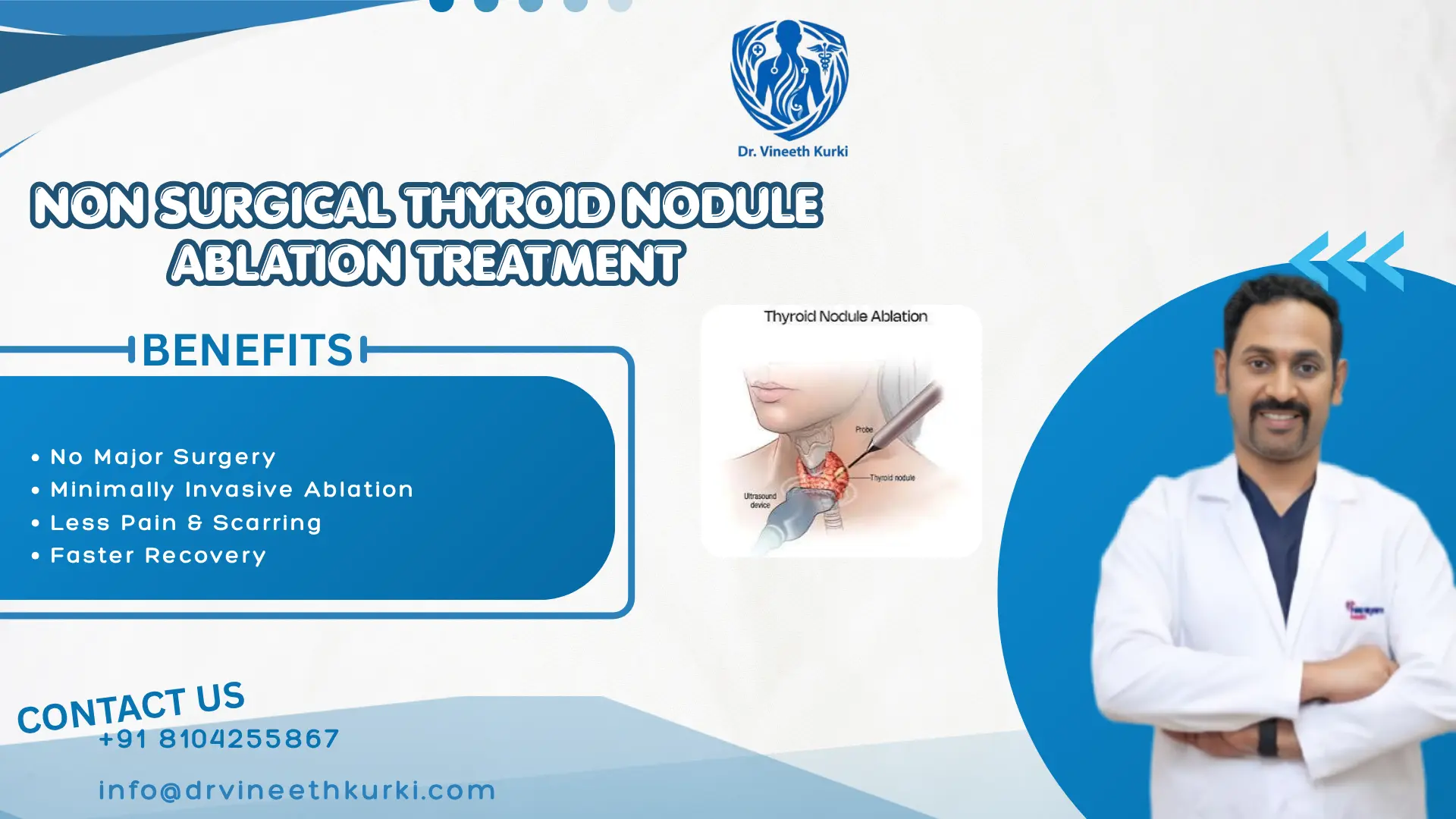
Thyroid nodules are common growths within the thyroid gland, located at the front of the neck. Most are benign, but some can cause visible swelling, difficulty swallowing, throat pressure, or cosmetic concerns. When a nodule becomes symptomatic, patients may consider Thyroid Nodule Treatment to relieve discomfort and improve quality of life.
Non Surgical thyroid nodule ablation treatment is a minimally invasive option for carefully selected patients with confirmed benign thyroid nodules. Procedures such as radiofrequency ablation (RFA) and microwave ablation use image-guided energy to destroy targeted tissue, allowing the nodule to shrink gradually over time. Unlike conventional surgery, these techniques generally do not require a surgical incision or removal of the thyroid gland.
For patients exploring Benign Thyroid Nodule Treatment in Bangalore, Dr Vineeth Kurki, Endovascular Interventional Radiologist in Bangalore, can assess whether an image-guided procedure is suitable. The choice depends on the nodule's size, location, biopsy findings, symptoms, thyroid function, and overall health. A specialist assessment is essential because ablation is not appropriate for every thyroid nodule.
1. What Is Non Surgical Thyroid Nodule Ablation Treatment?
What Are the Common Symptoms of Thyroid Nodules?
Thyroid nodules are often painless and may not cause noticeable symptoms. However, larger nodules can press against nearby structures and affect daily comfort.
Common symptoms include:
- A lump or swelling at the front of the neck.
- Difficulty swallowing food or liquids.
- A feeling of tightness or pressure in the throat.
- Voice changes or persistent hoarseness.
- Neck discomfort, particularly when the nodule becomes larger.
- Symptoms of excess thyroid hormone, such as palpitations, sweating, or tremors, in some patients.
Sudden neck swelling, significant breathing difficulty, or new persistent voice changes should be assessed promptly by a medical professional.
What Causes Thyroid Nodules?
Thyroid nodules can develop for several reasons, including benign thyroid tissue growth, fluid-filled cysts, inflammation, iodine deficiency, and genetic factors. Their likelihood also increases with age.
Most thyroid nodules are noncancerous, but their appearance alone cannot confirm that they are benign. Proper investigation is essential before selecting a treatment.
How Are Thyroid Nodules Diagnosed?
Diagnosis typically involves a physical examination, thyroid ultrasound, blood tests, and a biopsy when indicated.
- Thyroid ultrasound: Evaluates the nodule's size, structure, composition, and suspicious features.
- Thyroid function tests: Measure hormone levels and help identify an overactive or underactive thyroid.
- Fine-needle aspiration (FNA): Collects cells for laboratory examination to help determine whether the nodule is benign or suspicious.
- Additional investigations: May be recommended when biopsy results are inconclusive or the clinical findings require further evaluation.
For patients considering Benign Thyroid Nodule Treatment, establishing the diagnosis is particularly important because ablation does not provide the same complete tissue specimen as surgical removal.
Who Is Suitable for Ablation?
Non Surgical thyroid nodule ablation treatment may be appropriate for patients with confirmed benign nodules that cause pressure symptoms or cosmetic concerns. Some autonomously functioning nodules may also be considered after specialist assessment.
Suitability depends on the nodule's size, location, biopsy results, thyroid function, and proximity to important structures. Patients with suspected malignancy or uncertain biopsy findings generally require further evaluation before ablation is considered.
2. Non Surgical Thyroid Nodule Ablation Treatment: Procedure, Benefits and Risks
What Is Thyroid Nodule Ablation?
Thyroid nodule ablation is an image-guided procedure that destroys targeted nodule tissue so that the body can gradually reduce its volume. It is performed by a suitably trained specialist, such as an interventional radiologist with expertise in thyroid ablation.
The main techniques include:
- Radiofrequency ablation (RFA): Uses heat generated by radiofrequency energy.
- Microwave ablation: Uses microwave energy to heat and destroy targeted tissue.
- Ethanol ablation: Uses alcohol injected into the nodule, particularly for recurrent cystic nodules.
The appropriate method depends on the nodule's composition, clinical characteristics, and the specialist's assessment.
How Is the Procedure Performed?
Non Surgical thyroid nodule ablation treatment generally follows these steps:
- Pre-procedure assessment: The specialist reviews ultrasound findings, biopsy results, thyroid function, symptoms, and medical history.
- Local anaesthesia: The treatment area is numbed to minimise discomfort.
- Ultrasound guidance: The specialist positions a thin needle electrode inside the nodule using real-time imaging.
- Targeted ablation: Energy is delivered to selected areas of the nodule while the specialist monitors the surrounding structures.
- Post-procedure observation: The patient is monitored for pain, swelling, voice changes, or other immediate complications before discharge.
The procedure commonly takes around 30–90 minutes, although the duration depends on the nodule's size, location, and complexity. Many patients return home the same day.
What Are the Benefits of Minimally Invasive Thyroid Treatment?
For appropriately selected patients, the potential benefits include:
- No conventional surgical incision or large neck scar.
- Preservation of much of the healthy thyroid tissue.
- A relatively short initial recovery period.
- Local anaesthesia in many cases.
- Gradual reduction in nodule volume.
- Relief from pressure symptoms and improvement in neck appearance.
Ablation does not immediately remove the entire nodule. Shrinkage occurs gradually over several months, and some patients may require additional treatment.
What Are the Risks and Limitations?
Although generally well tolerated when performed by experienced specialists, ablation can cause temporary neck pain, swelling, bruising, or discomfort. Less common complications include voice changes, bleeding, infection, skin burns, and injury to nearby structures.
Other limitations include incomplete shrinkage, regrowth of residual tissue, and the need for repeat treatment. Careful patient selection and appropriate follow-up help manage these risks.
Non Surgical Thyroid Nodule Ablation Treatment vs Surgery
| Feature | Ablation | Thyroid surgery |
| Procedure | Image-guided needle treatment | Surgical removal of part or all of the thyroid |
| Incision | No conventional surgical incision | Usually a neck incision |
| Anaesthesia | Usually local | Usually general |
| Recovery | Often a few days | Often longer |
| Thyroid tissue | Much of the gland is preserved | Depends on the extent of removal |
| Thyroid medication | Often avoidable, but monitoring is needed | May be required, particularly after total thyroidectomy |
| Main limitation | No complete surgical specimen | Surgical and anaesthetic risks |
Surgery may be preferable when cancer is suspected, the diagnosis is uncertain, the nodule causes significant compression, or ablation is unsuitable. The best option depends on the patient's clinical condition rather than a general preference for one technique.
3. Recovery, Follow-Up and Choosing the Right Thyroid Nodule Treatment
What Is Recovery Like After Ablation?
Recovery after Non Surgical thyroid nodule ablation treatment is usually relatively quick. Many patients can resume routine activities within one or two days, depending on their symptoms and the treating specialist's advice.
Mild tenderness, swelling, or temporary discomfort may occur. Patients should follow their discharge instructions and avoid strenuous activities until they have been advised that it is safe to resume them.
Seek urgent medical attention for breathing difficulty, rapidly increasing neck swelling, significant bleeding, or new or persistent voice changes.
How Long Does It Take for a Thyroid Nodule to Shrink?
Nodule shrinkage happens gradually, generally over several months. The extent of reduction varies with the initial size, composition, ablation technique, and individual response.
Follow-up ultrasound examinations help assess the reduction in volume and determine whether additional treatment is necessary. Patients should not expect the nodule to disappear immediately after the procedure.
Does Ablation Affect Thyroid Function?
One advantage of ablation is that it targets the nodule while preserving much of the surrounding thyroid tissue. Thyroid function is often maintained, but this cannot be guaranteed.
Patients with existing thyroid disorders or hormone-producing nodules may need ongoing blood tests and additional treatment. Your specialist will advise how frequently thyroid function should be monitored.
How Do You Choose the Right Treatment?
When evaluating Thyroid Nodule Treatment options, the specialist considers several factors:
- Nodule size, composition, and location.
- Biopsy findings and the likelihood of malignancy.
- Severity of pressure symptoms or cosmetic concerns.
- Thyroid hormone levels.
- Previous thyroid procedures or treatments.
- Other medical conditions and medications.
- Personal preferences and the risks of each procedure.
For patients seeking Benign Thyroid Nodule Treatment in Bangalore, a consultation with an experienced specialist can help establish whether ablation, surgery, or continued monitoring is most appropriate.
The cost of treatment also varies according to the technique, nodule characteristics, diagnostic investigations, facility charges, and follow-up requirements. An accurate estimate should be obtained directly from the treating facility after assessment rather than relying on a fixed or assumed price.
4. Frequently Asked Questions About Non Surgical Thyroid Nodule Ablation Treatment
Is Non Surgical Thyroid Nodule Ablation Treatment Safe?
It is generally well tolerated in appropriately selected patients when performed by a trained specialist. Potential complications include pain, swelling, voice changes, bleeding, and incomplete shrinkage. Individual suitability and risks must be assessed before treatment.
Can Thyroid Nodules Be Treated Without Surgery?
Yes. Selected benign thyroid nodules can be treated with radiofrequency ablation, microwave ablation, or ethanol ablation. The appropriate approach depends on the nodule's characteristics and the patient's clinical condition.
Is Thyroid Nodule Ablation Painful?
Local anaesthesia helps reduce discomfort during the procedure. Some patients experience mild pressure, soreness, or swelling afterward, which usually improves over time.
How Long Does the Ablation Procedure Take?
The procedure commonly takes around 30–90 minutes. Larger or more complex nodules may require additional time, and patients are usually monitored afterward.
Will the Thyroid Nodule Disappear Completely?
Not necessarily. Ablation aims to reduce the nodule's volume and relieve symptoms rather than remove it immediately. The amount of shrinkage varies, and follow-up imaging is necessary.
Can a Thyroid Nodule Grow Again After Ablation?
Yes. Residual tissue may persist or grow over time. Some patients need repeat ablation or another treatment depending on follow-up findings and symptoms.
Is Ablation Better Than Thyroid Surgery?
Neither approach is best for every patient. Ablation may be suitable for selected benign nodules, whereas surgery may be more appropriate for suspicious nodules, cancer, significant compression, or uncertain diagnoses.
How Much Does Thyroid Nodule Ablation Cost in Bangalore?
The cost depends on the nodule's size and location, the procedure selected, investigations, facility charges, and individual treatment requirements. Contact the treating facility for an estimate based on your assessment.
Where Can I Consult a Thyroid Ablation Specialist in Bangalore?
Patients can enquire about an assessment with Dr Vineeth Kurki, Endovascular Interventional Radiologist in Bangalore, at Mazumdar Shaw Medical Center, Narayana Health City, Bommasandra Industrial Area, Bommasandra, Karnataka 560099. Appointment availability and suitability for ablation should be confirmed directly with the facility.
Is Ablation Suitable for Every Benign Thyroid Nodule?
No. Some nodules are better managed through observation, medication where indicated, or surgery. The decision depends on symptoms, biopsy findings, nodule characteristics, and the patient's overall health.
Conclusion: Explore Your Thyroid Treatment Options
Non Surgical thyroid nodule ablation treatment offers a minimally invasive option for selected patients with confirmed benign thyroid nodules that cause discomfort, pressure symptoms, or cosmetic concerns. Radiofrequency and microwave ablation can reduce nodule volume while preserving much of the surrounding thyroid tissue and often allowing a relatively short recovery.
However, ablation is not suitable for every patient. Accurate diagnosis, appropriate biopsy assessment, ultrasound evaluation, and personalised treatment planning are essential before proceeding.
Book a consultation with Dr Vineeth Kurki, Endovascular Interventional Radiologist in Bangalore, to discuss your thyroid nodule and determine whether minimally invasive treatment is appropriate for your condition.
- Phone: +918104255867
- Location: Mazumdar Shaw Medical Center, Narayana Health City, Bommasandra Industrial Area, Bommasandra, Karnataka 560099.