
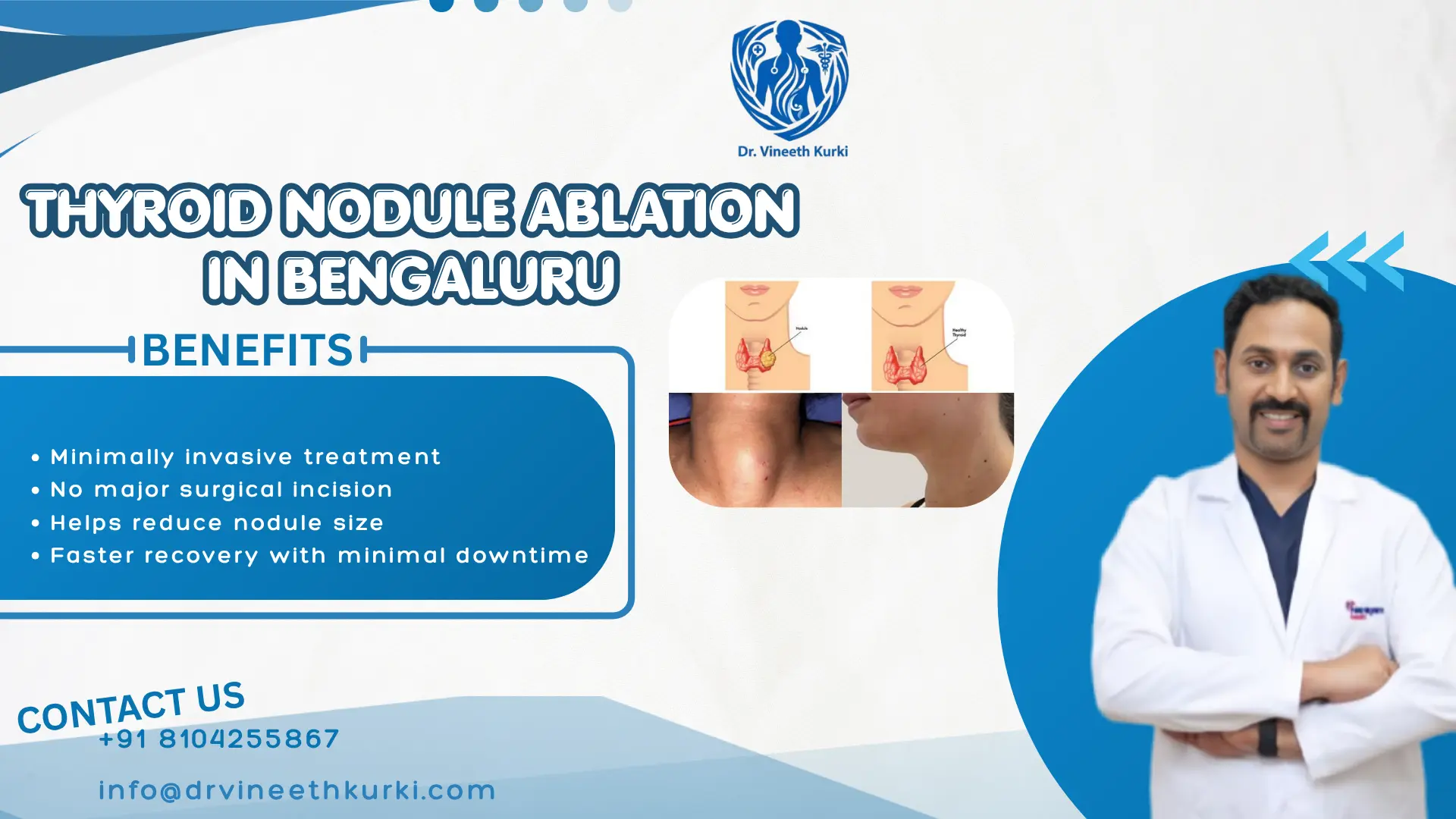
Thyroid nodules are lumps that develop within the thyroid gland, a butterfly-shaped organ located at the front of the neck. Most thyroid nodules are benign, but some can cause visible swelling, difficulty swallowing, a feeling of pressure in the throat, or cosmetic concerns. When a nodule becomes troublesome, patients may wonder whether surgery is the only treatment option.
Thyroid Nodule Ablation in Bengaluru is an option worth discussing with a qualified specialist when a nodule is confirmed to be benign and meets the criteria for minimally invasive treatment. Thyroid ablation uses targeted energy to reduce the volume of selected nodules while preserving as much normal thyroid tissue as possible.
For suitable patients, Thyroid Ablation may offer an alternative to conventional surgery without requiring the entire thyroid gland or nodule to be surgically removed. Radiofrequency ablation (RFA) is one technique used for selected benign thyroid nodules. However, ablation is not appropriate for every thyroid condition, and careful evaluation is essential before treatment.
Patients considering thyroid treatment in Bengaluru should understand the symptoms, diagnostic tests, treatment options, benefits, limitations, and expected recovery before making a decision.
Understanding Thyroid Nodules: Symptoms and Causes
What Is a Thyroid Nodule?
A thyroid nodule is an abnormal growth of tissue within the thyroid gland. Nodules can be solid, fluid-filled, or a combination of both. They may occur as a single lump or as multiple nodules.
Many thyroid nodules are discovered during a routine examination or an ultrasound performed for another reason. Small nodules often cause no symptoms and may only require periodic monitoring. Larger nodules can produce pressure symptoms or become visible as a swelling in the front of the neck.
The suitability of Thyroid Nodule Ablation in Bengaluru depends on factors such as the nodule’s size, ultrasound appearance, biopsy findings, symptoms, and the patient’s overall health.
Common Symptoms of Thyroid Nodules
Thyroid nodules do not always cause noticeable symptoms. When symptoms occur, they may include:
- A lump or swelling at the front of the neck.
- A sensation of pressure or fullness in the throat.
- Difficulty swallowing food or liquids.
- Discomfort when wearing tight collars.
- Cosmetic concerns caused by visible neck swelling.
- Hoarseness or changes in the voice.
- Breathing discomfort when a large nodule presses on nearby structures.
Some thyroid nodules also produce excess thyroid hormones, potentially causing palpitations, sweating, tremors, anxiety, or unexplained weight changes. These symptoms require assessment of thyroid function and may need treatment beyond local nodule ablation.
Important: New or rapidly increasing neck swelling, persistent voice changes, or difficulty breathing requires prompt medical evaluation. Severe breathing difficulty warrants emergency care.
What Causes Thyroid Nodules?
The exact cause varies from person to person. Factors associated with thyroid nodules include:
- Benign overgrowth of thyroid tissue.
- Colloid nodules or cyst formation.
- Thyroid inflammation.
- Multinodular goitre.
- Changes in thyroid tissue associated with ageing.
- Certain genetic or family-history factors.
- Thyroid cancer in a minority of cases.
A thyroid nodule should not automatically be assumed to be cancerous or harmless based on its size or symptoms alone. Proper imaging and, when indicated, biopsy are necessary to establish the diagnosis.
Diagnosis and Treatment: How Thyroid Ablation Works
How Are Thyroid Nodules Diagnosed?
A careful diagnosis helps determine whether observation, medication, ablation, or surgery is appropriate. For patients exploring Thyroid Nodule Ablation in Bengaluru, the assessment generally includes the following steps.
- Clinical examination: The specialist examines the neck and reviews symptoms, medical history, and any changes in the lump.
- Thyroid ultrasound: Ultrasound evaluates the nodule’s size, composition, borders, and other features that may indicate whether further investigation is needed.
- Thyroid function tests: Blood tests, including thyroid-stimulating hormone (TSH), help determine how well the thyroid gland is functioning.
- Fine-needle aspiration cytology (FNAC): A thin needle collects cells from the nodule for laboratory examination. Depending on the findings, repeat sampling or a core biopsy may be needed.
- Additional investigations: Selected patients may require further imaging, specialist assessment, or other tests based on their results.
Most nodules considered for thermal ablation should have a reliable benign diagnosis. Suspicious ultrasound features, indeterminate biopsy results, or suspected thyroid cancer may require further evaluation rather than proceeding directly to ablation.
What Is Thyroid Ablation?
Thyroid Ablation is a minimally invasive procedure that uses targeted energy to treat selected thyroid nodules. Instead of surgically removing the nodule, the specialist applies energy to the target tissue, causing it to shrink gradually over the following months.
The procedure is generally performed using ultrasound guidance to help position the treatment probe accurately and protect nearby structures.
Radiofrequency Ablation (RFA)
Radiofrequency ablation uses electrical energy to generate controlled heat within the nodule. This damages the targeted tissue, which is gradually broken down by the body.
RFA may be considered for patients with confirmed benign nodules that cause pressure symptoms, cosmetic concerns, or other problems. Its suitability depends on the nodule’s size, position, composition, and relationship to nearby structures.
Laser Ablation
Laser ablation uses laser energy delivered through a thin fibre to heat and treat the targeted tissue. It is another thermal technique used for selected thyroid nodules in appropriate clinical settings.
RFA and laser ablation are different technologies. The choice depends on the available expertise, equipment, nodule characteristics, and the specialist’s assessment.
Embolisation is not the same as thyroid ablation. Embolisation blocks selected blood vessels, whereas RFA and laser ablation use energy to destroy targeted tissue. They should not be described as interchangeable procedures.
What Happens During the Procedure?
For eligible patients, the process typically involves these steps:
- Pre-procedure assessment: The specialist reviews the ultrasound, biopsy findings, thyroid function, medications, and medical history.
- Preparation: The treatment area is cleaned, and local anaesthesia is usually administered. The exact preparation depends on the technique and clinical circumstances.
- Ultrasound guidance: The specialist uses real-time imaging to position the needle or probe within the target nodule.
- Targeted treatment: The selected energy is delivered in a controlled manner to treat the intended tissue while taking precautions to protect surrounding structures.
- Post-procedure observation: The patient is monitored for discomfort, swelling, voice changes, or other immediate concerns before discharge is considered appropriate.
The duration varies with the nodule’s size, location, and complexity. Patients should follow the treating team’s instructions regarding medicines, eating, activity, and follow-up.
Benefits and Limitations of Thyroid Ablation
For appropriately selected patients, Thyroid Nodule Ablation in Bengaluru may offer several advantages over surgery.
Potential benefits include:
- No conventional surgical incision.
- Minimal visible scarring in many cases.
- Preservation of most healthy thyroid tissue.
- Potential improvement in pressure symptoms and cosmetic concerns.
- Often a shorter recovery period than conventional surgery.
- A possibility of avoiding thyroid hormone replacement that may otherwise be needed after some thyroid operations.
These benefits are not guaranteed. A nodule generally shrinks gradually rather than disappearing immediately, and larger nodules may require more than one treatment. Follow-up ultrasound is necessary to evaluate the response.
Potential risks include pain, bruising, swelling, bleeding, thermal injury to nearby structures, voice changes, and incomplete reduction in nodule volume. Thyroid function can also change in some patients. The specialist should explain the risks relevant to the individual case.
Thyroid Treatment Without Surgery: Who May Be Suitable?
Thyroid Treatment Without Surgery may be suitable for some patients with benign thyroid nodules, but it does not mean that every thyroid disorder can be treated with ablation.
A specialist may consider ablation when:
- The nodule has been adequately evaluated and confirmed as benign.
- The patient experiences pressure symptoms or cosmetic concerns.
- The nodule’s location and size allow safe treatment.
- The patient prefers to avoid surgery after discussing the alternatives.
- The expected benefits outweigh the potential risks.
Ablation may not be suitable when malignancy is suspected, biopsy findings are inconclusive, or the nodule is positioned in a way that makes treatment unsafe. Some cystic nodules may be better suited to aspiration or another specific treatment.
Patients with thyroid hormone overproduction may also need a different treatment plan. Medication, radioactive iodine, or surgery may be considered depending on the cause and clinical findings.
Thyroid Ablation vs Surgery: Which Is Better?
The choice between ablation and surgery depends on the diagnosis, symptoms, treatment goals, and patient preferences.
| Comparison factor | Thyroid ablation | Thyroid surgery |
| Treatment method | Targeted energy treats the nodule | The nodule or part/all of the thyroid is removed |
| Incision | Small needle or probe entry | Surgical incision |
| Scarring | Usually minimal | A neck scar may remain |
| Tissue for pathology | No complete excised specimen | Removed tissue can be examined |
| Recovery | Often relatively short | Usually involves more recovery |
| Thyroid function | Most untreated tissue is preserved | Hormone replacement may be needed, depending on the operation |
| Best suited for | Selected benign nodules | Suspicious, malignant, large, or otherwise unsuitable nodules, depending on the case |
Neither option is universally better. Surgery remains important when cancer is suspected or confirmed, when comprehensive tissue examination is necessary, or when ablation is unlikely to provide a safe or adequate result.
For patients searching for Thyroid Nodule Ablation in Bengaluru, a specialist consultation can clarify whether ablation, monitoring, or surgery is the most appropriate choice.
Recovery, Frequently Asked Questions, and Consultation in Bengaluru
What Is Recovery Like After Thyroid Ablation?
Recovery after thyroid ablation is generally manageable for suitable patients, although individual experiences vary.
Some patients experience mild neck discomfort, tenderness, bruising, or temporary swelling. These effects often improve over the following days. Most patients can resume light daily activities relatively soon, subject to their doctor’s advice.
After Thyroid Nodule Ablation in Bengaluru, follow-up commonly includes clinical review and ultrasound examinations to measure the reduction in nodule volume. The nodule may continue shrinking over several months, so the final result cannot usually be judged immediately after treatment.
Patients should contact their treating team if they experience increasing swelling, persistent or worsening pain, voice changes, fever, or difficulty swallowing. Breathing difficulty requires urgent medical attention.
Follow-up schedules and activity restrictions depend on the procedure and individual condition.
Frequently Asked Questions (FAQs)
1. What is thyroid nodule ablation?
Thyroid nodule ablation is a minimally invasive procedure that uses targeted energy, such as radiofrequency or laser energy, to destroy selected thyroid nodule tissue. The treated nodule gradually shrinks over time.
2. Is Thyroid Ablation Safe?
Thyroid ablation can be appropriate for carefully selected patients when performed by an experienced specialist. Potential complications include bleeding, pain, voice changes, and injury to nearby structures. A consultation helps establish whether the expected benefits outweigh the risks.
3. Can thyroid nodules be treated without surgery?
Yes. Some confirmed benign thyroid nodules can be treated with ablation, while others may only need monitoring. The right approach depends on the diagnosis, symptoms, and ultrasound findings.
4. Is RFA better than thyroid surgery?
RFA may offer less scarring and a shorter recovery for selected benign nodules. Surgery may be more appropriate for suspicious nodules, confirmed cancers, or cases requiring complete removal and detailed pathological examination.
5. Does thyroid ablation remove the nodule completely?
Not necessarily. Ablation treats the targeted tissue, which is gradually absorbed or reduced by the body. The nodule may remain visible on ultrasound even after a successful procedure.
6. Can thyroid ablation affect thyroid hormone levels?
Thyroid function is often preserved because most healthy thyroid tissue remains intact. However, changes in thyroid hormone levels can occur, so monitoring may be recommended.
7. How long does recovery take after thyroid ablation?
Many patients return to light activities within a short period, but recovery varies with the procedure and individual circumstances. Follow your specialist’s instructions about exercise, work, and follow-up.
8. Is a biopsy necessary before thyroid ablation?
A reliable diagnosis is essential. FNAC is commonly used to assess thyroid nodules, and repeat FNAC or core biopsy may be recommended depending on the ultrasound appearance and initial results.
9. Where can I consult a specialist for thyroid ablation near me in Bengaluru?
You can contact Dr Vineeth Kurki at Mazumdar Shaw Medical Center, Narayana Health City, Bommasandra, Bengaluru, to discuss your symptoms, investigations, and suitability for minimally invasive thyroid treatment.
10. How much does thyroid nodule ablation cost in Bengaluru?
The cost depends on the technique used, nodule size and complexity, investigations, hospital facilities, and follow-up requirements. An individual estimate should be requested after clinical assessment; a fixed price cannot be assumed for every patient.
Conclusion: Choosing the Right Thyroid Treatment
Thyroid Nodule Ablation in Bengaluru may be a useful alternative to conventional surgery for patients with appropriately evaluated, benign thyroid nodules that cause symptoms or cosmetic concerns. RFA and laser ablation can reduce nodule volume while preserving much of the surrounding thyroid tissue.
However, ablation is not suitable for every nodule. Accurate diagnosis, appropriate biopsy assessment, an experienced treating specialist, and regular follow-up are essential for safe treatment planning.
If you are considering Thyroid Nodule Ablation in Bengaluru, discuss the available options, expected results, risks, recovery, and long-term monitoring with a qualified specialist. The final treatment recommendation should always reflect your individual medical condition.
Book a Consultation with Dr Vineeth Kurki
Endovascular Interventional Radiologist in Bangalore
Consult Dr Vineeth Kurki to discuss your thyroid nodule evaluation and whether a minimally invasive treatment option may be appropriate for you.
Call Now : +9181042 55867
info@drvineethkurki.com
Mazumdar Shaw Medical Center, Narayana Health City, Bommasandra Industrial Area, Bommasandra, Karnataka 560099.