

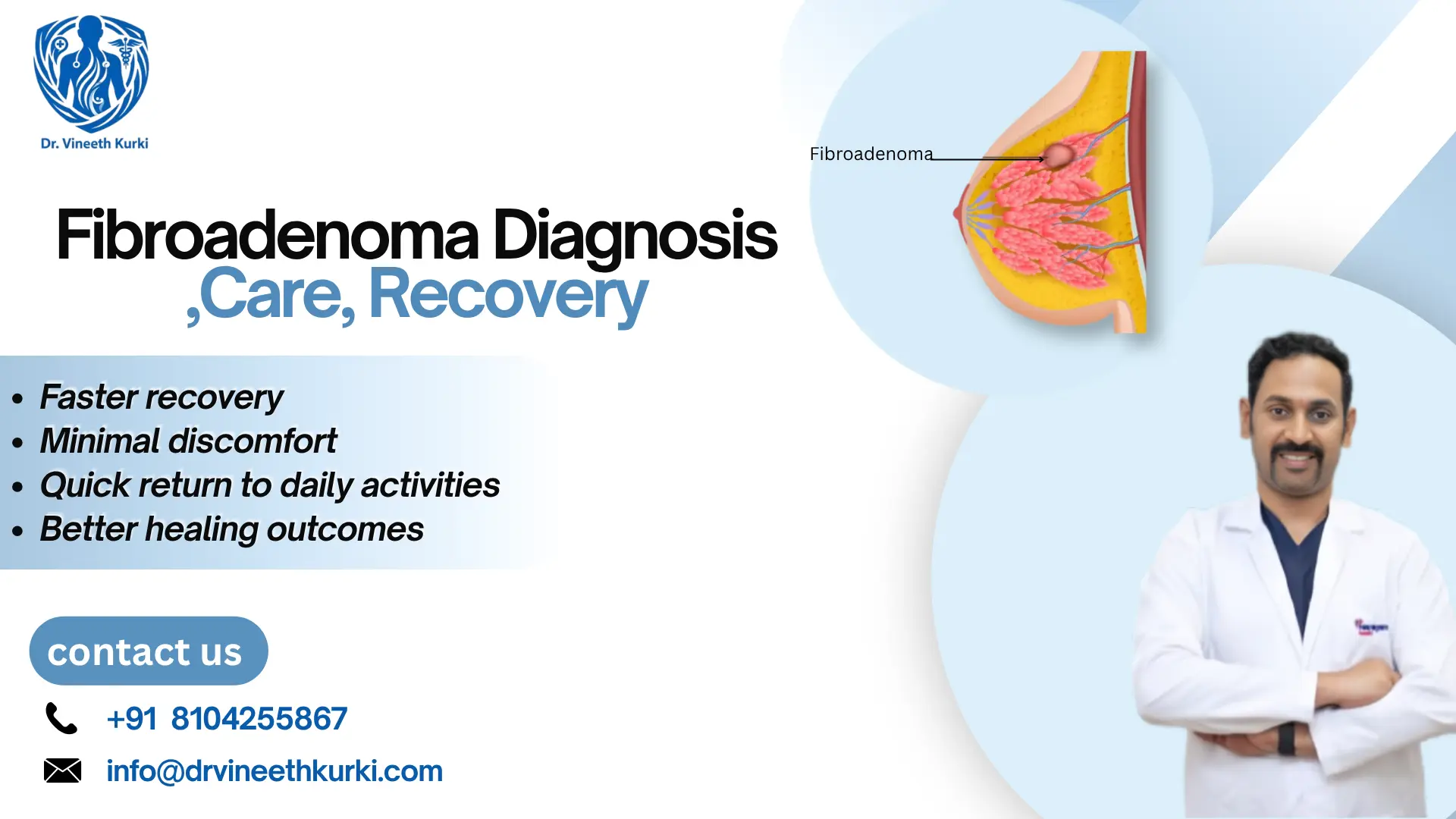
Finding a breast lump can be a stressful experience, but not every lump is a sign of cancer. One of the most common benign breast conditions is a fibroadenoma, which usually affects younger women. Although fibroadenomas are non-cancerous, timely evaluation is essential to confirm the diagnosis and determine whether treatment is necessary.
Understanding Fibroadenoma Diagnosis, Care, Recovery helps patients make informed decisions about their breast health. Advances in medical imaging and minimally invasive procedures have significantly improved patient outcomes. Today, Fibroadenoma Treatment in Bangalore offers both surgical and minimally invasive options based on the size, symptoms, and characteristics of the lump.
If diagnosed early, many women may be eligible for Non-Surgical Fibroadenoma Treatment, allowing them to avoid major surgery while achieving excellent cosmetic and clinical outcomes. This guide explains everything you need to know about fibroadenomas, including their symptoms, causes, diagnosis, and available treatment options.
What Is a Fibroadenoma?
A fibroadenoma is a benign (non-cancerous) breast tumor made up of glandular and fibrous connective tissue. These lumps are usually smooth, firm, and movable beneath the skin. They commonly occur in women between the ages of 15 and 35 but can also develop later in life.
Most fibroadenomas are harmless and grow slowly. Some remain the same size for years, while others may shrink naturally or enlarge due to hormonal changes such as pregnancy or menopause. Although they rarely become cancerous, every breast lump should be examined by a qualified specialist.
Understanding the condition is the first step toward effective Fibroadenoma Diagnosis, Care, Recovery and selecting the most appropriate treatment plan.
Common Symptoms
The symptoms of a fibroadenoma may vary from person to person. Many women do not experience pain, while others notice mild tenderness.
Common symptoms include:
- A smooth, round, or oval breast lump
- Firm but movable lump beneath the skin
- Usually painless
- Mild tenderness before menstruation
- Lump that may slowly increase in size
- Single or multiple lumps in one or both breasts
If you notice any new breast lump, it is important to seek medical evaluation rather than assuming it is harmless.
Causes and Risk Factors
The exact cause of fibroadenomas is not completely understood. However, hormonal activity is believed to play a significant role in their development. These lumps are particularly common during the reproductive years when estrogen levels are higher.
Possible Causes
- Hormonal fluctuations
- Increased sensitivity to estrogen
- Breast tissue changes during puberty
- Pregnancy-related hormonal changes
- Family history of benign breast disease
Risk Factors
Several factors may increase the likelihood of developing fibroadenomas:
- Age between 15 and 35 years
- Hormonal imbalance
- Pregnancy
- Use of hormone therapy
- Previous history of fibroadenoma
- Family history of breast conditions
Although these risk factors may contribute to the condition, many women develop fibroadenomas without any known cause.
When Should You See a Doctor?
You should consult a breast specialist if you notice:
- A newly discovered breast lump
- Rapid increase in lump size
- Persistent breast pain
- Skin changes over the breast
- Nipple discharge
- Changes in breast shape
Early consultation allows accurate diagnosis and appropriate management before unnecessary anxiety develops.
Diagnosis of Fibroadenoma
Accurate diagnosis is essential before deciding on any treatment. The goal is to confirm that the lump is benign while ruling out other breast conditions.
Modern Fibroadenoma Treatment in Bangalore begins with a detailed clinical assessment followed by advanced imaging techniques.
Clinical Breast Examination
The doctor evaluates the size, shape, mobility, and consistency of the breast lump during a physical examination. Fibroadenomas are typically smooth, well-defined, and easily movable.
Breast Ultrasound
Ultrasound is often the preferred imaging test for younger women because dense breast tissue can make mammograms less effective. It helps determine the size, location, and characteristics of the lump.
Mammography
Women above the age of 40 or those with additional risk factors may require a mammogram. This imaging technique provides a detailed view of breast tissue and helps identify any suspicious changes.
Breast MRI
MRI may be recommended for complex breast lesions, multiple lumps, or when additional information is needed after ultrasound or mammography.
Core Needle Biopsy
A biopsy is considered the gold standard for confirming the diagnosis. Using imaging guidance, a small tissue sample is removed and examined under a microscope to verify that the lump is benign.
Why Early Diagnosis Matters
Prompt evaluation offers several important benefits:
- Accurate confirmation of the diagnosis
- Reduced anxiety for patients
- Early identification of any concerning changes
- Better treatment planning
- Opportunity to consider Non-Surgical Fibroadenoma Treatment when appropriate
Receiving an early diagnosis helps doctors recommend the most suitable management strategy while avoiding unnecessary procedures.
Treatment Options for Fibroadenoma
Choosing the right treatment depends on several factors, including the size of the fibroadenoma, its growth pattern, symptoms, imaging findings, and the patient’s overall health. Not every fibroadenoma requires immediate removal. After a thorough evaluation, your doctor will recommend the most appropriate treatment plan.
Observation and Regular Monitoring
Many small fibroadenomas that do not cause discomfort can be safely monitored through regular clinical examinations and imaging studies. If the lump remains stable and biopsy results confirm that it is benign, periodic follow-up may be all that is needed.
Doctors generally recommend monitoring when:
- The fibroadenoma is small.
- There are no concerning symptoms.
- Imaging and biopsy confirm a benign lesion.
- The lump is not increasing in size.
Surgical Removal
Surgery may be advised if:
- The fibroadenoma grows rapidly.
- The lump becomes painful.
- The diagnosis is uncertain.
- The patient prefers removal.
- Cosmetic concerns arise due to the size of the lump.
Although surgery is effective, it may involve an incision, stitches, a recovery period, and a small scar.
Non-Surgical Fibroadenoma Treatment
Advancements in Interventional Radiology have introduced Non-Surgical Fibroadenoma Treatment as an effective option for selected patients. Using image-guided minimally invasive techniques, specialists can treat certain fibroadenomas with a tiny skin puncture instead of a large surgical incision.
Compared with traditional surgery, this approach often results in:
- Minimal discomfort
- No major incision
- Reduced scarring
- Short procedure time
- Faster return to daily activities
- Excellent cosmetic outcomes
Patients considering Fibroadenoma Treatment in Bangalore should discuss whether they are suitable candidates for minimally invasive treatment after a detailed clinical evaluation.
Benefits and Recovery
The recovery experience depends on the type of treatment performed. Patients who undergo minimally invasive procedures generally recover much faster than those who undergo open surgery.
Benefits of Minimally Invasive Treatment
Some of the major advantages include:
- Small skin puncture instead of a large incision
- Minimal blood loss
- Lower risk of infection
- Reduced pain after the procedure
- Day-care treatment in many cases
- Faster recovery
- Minimal interruption to work and daily life
- Better cosmetic appearance
These benefits have made minimally invasive techniques an increasingly preferred option for eligible patients seeking Fibroadenoma Treatment in Bangalore.
Recovery After Treatment
Recovery is usually straightforward when patients follow their doctor’s advice.
Most patients can expect:
- Mild soreness for one to three days
- Return to routine activities within 24 to 48 hours
- Minimal wound care
- Short follow-up visits
- Gradual resolution of tenderness
During recovery, patients should:
- Take prescribed medications as directed.
- Keep the treated area clean and dry.
- Avoid strenuous exercise for a few days if advised.
- Attend scheduled follow-up appointments.
- Continue regular breast self-examinations.
Surgery vs. Non-Surgical Treatment
| Feature | Surgical Treatment | Non-Surgical Fibroadenoma Treatment |
| Incision | Larger incision | Tiny puncture |
| Hospital Stay | May require admission | Usually day-care |
| Pain | Moderate | Minimal |
| Recovery Time | Longer | Faster |
| Scar | Visible | Minimal |
| Return to Work | Several days | Often within 1–2 days |
About Dr. Vineeth Kurki
Dr. Vineeth Kurki is a highly experienced Endovascular Interventional Radiologist specializing in advanced image-guided, minimally invasive procedures. He focuses on delivering personalized treatment plans that prioritize patient safety, faster recovery, and excellent clinical outcomes.
Using modern imaging technology and evidence-based techniques, Dr. Vineeth Kurki provides precise diagnosis and treatment for a wide range of vascular and non-vascular conditions. His patient-centered approach ensures that every individual receives comprehensive care from consultation through recovery.
Services Offered
Dr. Vineeth Kurki provides advanced minimally invasive treatments for several conditions, including:
- Fibroadenoma Treatment in Bangalore
- Non-Surgical Fibroadenoma Treatment
- Thyroid Nodule Ablation
- Uterine Fibroid Embolization (UFE)
- Varicose Veins Treatment
- Prostate Artery Embolization (PAE)
- Genicular Artery Embolization (GAE)
- Image-Guided Biopsy
- Peripheral Vascular Interventions
- Dialysis Access Procedures
- Interventional Oncology Treatments
- Non-Surgical Treatment for Benign Breast Conditions
Frequently Asked Questions
1. What is a fibroadenoma?
A fibroadenoma is a benign breast lump made of fibrous and glandular tissue. It is one of the most common non-cancerous breast tumors in young women.
2. Is every fibroadenoma cancerous?
No. Fibroadenomas are benign and are not considered breast cancer. However, every new breast lump should be evaluated by a qualified specialist.
3. Do all fibroadenomas require treatment?
No. Many small fibroadenomas only require regular monitoring if they remain stable and do not cause symptoms.
4. Who is a candidate for Non-Surgical Fibroadenoma Treatment?
Eligibility depends on the size, location, imaging findings, and overall health of the patient. Your Interventional Radiologist will determine the most suitable treatment option.
5. Is the procedure painful?
Most minimally invasive procedures are performed under local anesthesia and involve only mild discomfort.
6. How long does recovery take?
Many patients return to normal daily activities within one or two days after minimally invasive treatment.
7. Can fibroadenomas return?
The treated fibroadenoma usually does not return, but new fibroadenomas may develop in the future. Regular follow-up is recommended.
8. Is Fibroadenoma Treatment in Bangalore safe?
Yes. When performed by experienced specialists using modern techniques, treatment is generally safe and associated with excellent outcomes.
9. When should I consult a doctor?
You should seek medical evaluation if you notice a new breast lump, rapid enlargement, breast pain, nipple discharge, or changes in the skin over the breast.
10. Can fibroadenoma affect breastfeeding?
Most fibroadenomas do not interfere with breastfeeding, although large or symptomatic lumps should be evaluated by a specialist.
Conclusion
Understanding Fibroadenoma Diagnosis, Care, Recovery empowers women to make informed decisions about their breast health. Although fibroadenomas are usually benign, prompt evaluation is essential to confirm the diagnosis and determine the most appropriate management strategy. With advances in Fibroadenoma Treatment in Bangalore, patients now have access to safe, effective, and minimally invasive options that reduce pain, minimize scarring, and support faster recovery. For eligible individuals, Non-Surgical Fibroadenoma Treatment offers an excellent alternative to conventional surgery while preserving healthy breast tissue.
Book an Appointment with Dr. Vineeth Kurki
If you have discovered a breast lump or have been diagnosed with a fibroadenoma, don’t delay seeking expert care.
Consult Dr. Vineeth Kurki, Endovascular Interventional Radiologist, for a comprehensive evaluation, accurate diagnosis, and personalized treatment plan. Whether you require observation, minimally invasive care, or advanced Fibroadenoma Treatment in Bangalore, you will receive compassionate, evidence-based treatment tailored to your needs.
Book your appointment today and take the first step toward better breast health with expert guidance and advanced minimally invasive care.